The soft smell of the gentle morning rain tickling my eager lungs, and the clangs of joyful platters abundant in earthy gifts seeped into the elemental morning symphony. Shy French balconies peaked over my head begging for a moment of attention, begging for a pinch of contemplation. My finger tips warm with anticipation rushed over the glyphs of antiquity, out of focus, away from me and plunged into the delicious nectar of the muses. While I sat dazed and reeking of bordeaux coloured hymns drunk on words that sobered with love, channelling the revelations of the ether into the tongue of man.
Category: English
Ode to a friend. Of being
A friend of mine composed this monodrama. I reacted to it with a poem: Outside the Realms of Space and Time – a Video Monodrama on Music , Art and philosophy
Amidst the perpetual entropy, a spark is lit
Fleetingly, of course, but it brightened our pit.
It borrowed, from the minds of whom we deem fit-
Thinkers of immense passion and great wit,
A capacity of thoughts to tilt.
But to oblivion to dart and not desist,
Then our lives we must decrypt.
And to leave the gloom and for the rhymes to lilt,
Listen we must to him that pitched
We, despite the temporal, exist!
Convoluted Ego
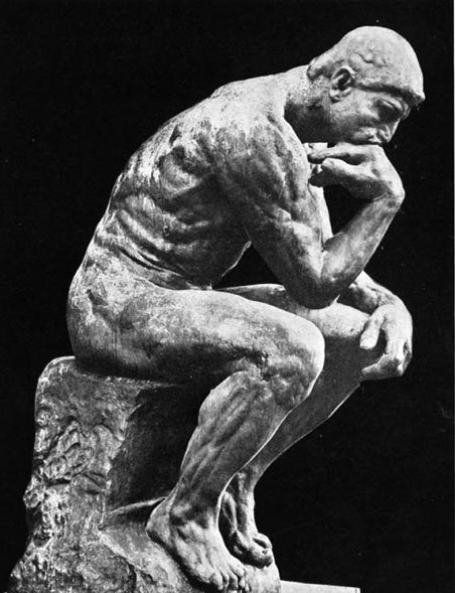
Buried behind the masked myth of erudition lay I: a broken marionette yearning for acceptance. From tongue to tongue and age to age, I seek company. But for the fear of frivolity and the dreadful scythe of judgement, I spread not my letters on the canvas of humanity.
But when I do, I convolute my letters, supplicating my importance.
Thus scribe I with a foreign tongue the lulls and the yarns of yore, a forlorn epitaph of a cursed populous: thou for whom the bell I tolled, thee shall I forsake.
Home

Write a short prose narrative that engages with the concepts of either ‘home’ or ‘homeland’ in 2000 words:
‘An Elderly Home Burnt To Cinders’, he reflected in his notebook whilst waiting for the foundation owner to show up. The reception was a dull white room with three plastic chairs that were probably planted there for convenience rather than comfort. As he gazed into the room thinking, he heard an echo of an approaching click-clack entering the reception. “The owner is still busy wrapping things up. Why don’t you have a look at our facilities whilst you wait?” said the woman stepping aside and leading him inside the facility without pausing. The corridor behind the reception was dim and cold and filled with doors with numbers and names on both sides. Its ceiling was low and yellow, stricken with a dried leakage. The lower half of its walls were covered with dark wooden planks and the other half with wallpapers that seemed to have been green once. “This was the new wing”, pointed the woman after a long silence as they reached the end of the corridor, “and that is the cafeteria”, she announced as she opened the door ushering him in and inviting a heavy smell of Chloride permeated with dampness and the odours of old food into the corridor. Despite the attack on his nostrils, he welcomed the open room and the cheap white neons reflected on the greyish tiles. “Here, our residents feel at home, recuperate, socialise and talk about ancient wars and romances…”. “Do you know when I will be able to see him, mam?” he interrupted her. She raised both eyebrows and looked at him as if noticing him for the first time. “Why don’t we go and wait for him at his office?” she ruptured mechanically and headed outside.
The office was in a building separated from the residential wing by a thicket and a gated garden. It was the most significant building in the cluster, with an Elizabethan façade, a marble vestibule, and a colonnade in its main hallway. They passed by the main entrance but accessed the building from a smaller side door. “Here, make yourself comfortable”, said the woman, then left the office without waiting for a reply. He looked up and around the office in bedazzlement, wondering how and where he could make himself comfortable. Despite the dimness of the room, he spotted a chimney and a brown leather chair with an attached ottoman. As he drew closer to the chimney, he noticed a painting of a lush landscape with nymphs like figures dancing light-heartedly. “I see that you have found the pride of this foundation,” said a deep sure voice from the other side of the room. “this is Elysium, the heroes’ final home and where the name of our foundation comes from.”
“God, when did you….”
“Apologies, I didn’t mean to startle you. Michelle told me that you were searching for me; it has been a very long night. Pray, how can I help you?”. The young man, dumb stricken, gazed towards the voice and addressed the shadow at the other side of the room. “I am from the local parish; I came here to pay my respect and to document what happened.”
“Yes, yes. I have asked that of the vicar earlier. Have you had a chance to look around?”
“Yes, I did, thanks to your assistant. It is as impressive as I have been told. May I trouble you, sir, to what do I owe today’s summon?
“As you are aware, my family is the custodian of this place. We occupied it for generations. It is our home, you see. But some time ago, we decided to share our blessings with the community and created the foundation of Elysium, but unfortunately, part of the legacy was lost today. The old wing got utterly destroyed, and a lot of people lost their homes. Have you had the chance to investigate the fire yet?
“No, sir, not yet.”
“Good, Good. There is no need. We have concluded that the fire was man-made.”
“Man-made, sir?”
“Yes. It seems that it was done on purpose: an act of vandalism, one might say.”
‘An Elderly Home, Sabotaged?’ wrote the man in his notebook.
“But we have yet to capture the culprit. What I don’t understand is why would anyone set their home ablaze? This place is heaven for them. Most of these old cynics are undeserving and delusional. We have paid our debt to the world, and this is how we get rewarded! Nobody believes in our cause anymore. Are you writing this down? I urge you please write: The Heavens, Betrayed! Yes, yes. With an exclamation mark. Good, good. That is more suitable.”
“It is indeed suitable, sir. I will share the report with you before I get back.”
“Now, that is a good lad,” the owner said when Michelle barged into the room.
“What is it now, Michelle,” asked the owner.
“Everybody from the old wing is safe and present except for Luc!” She replied.
“That old fool! It seems that our night’s toil is yet to be concluded. Dispatch everybody immediately!” He shouted hurriedly before addressing the young man, “you need not trouble yourself with this; we will find him. He is our oldest resident and not of my time. He was admitted here during the days of my father, I dare say, but one cannot be certain; no records were kept from that time. I beg your pardon, lad, but we have to adjourn our session. You know the way, I presume?”
With the session adjourned and respects paid, the young man left the main building and headed towards the old wing. Outside, the morning chill was fading, and the birds were yawning and shaking off the troubled night when the young man heard a quivering sob that filled his heart with melted passions and propelled him towards the source.
“Who goes there?” he announced as he walked by the thicket on his way back. The vegetation seemed to be old, older than the rest of the compound, and thick with ages of unmolested dust that rioted in anger as he wadded his way through the dead leaves and the dry, broken branches searching for the voice. As the bushes grew thicker and almost impossible to penetrate, the young man stumbled upon a figure covered with a filthy white robe shaking in agony with a muffled sob. He drew closer to it, moved by compassion. The ghost-like figure was a man, a very old man, with a face full of wrinkles resembling an old dry log abandoned for the elements to forsake. He had long thin limbs with a stature that seemed to have been shrunk under the weight of time and insurmountable toil.
“Sir, do you need help?” asked the young man.
With effort, the skeletal figure managed to raise his sunken head, gazing with lifeless eyes at the boy penetrating his soul and forcing a trickle of cold sweat down his neck. With that, the sob seemed to have gained energy and evolved from a hoarse moaning into a mumble and finally into an articulate speech.
“I started a war once. I did, yes, I did.” Said the old man with effort. “I did it for love. But I lost, I did, yes, I did. My family shattered and ruined because of me. I dared not see them again. No, I dared not.”
“Let me help you, sir. Come. Here, grab my hand.”
“I have been away for too long, for way too long. I had hoped to see them again. I wandered the land seeking support and retribution. I toiled and endured for ages hoping, no, knowing that I would one day be able to go back home. Oh, I did, I truly did.
“Do you live here, sir?”
“I lived in many places. I saw them get neglected, abandoned, and ruined, but I had never thought that this would happen to my home, for it was different. Yes, it was. It was full of love, warmth, and honied dew and bless. It was a paradise.”
“Sir, why don’t we continue this conversation somewhere else?” asked the young man politely, realising the old man’s delusional state.
“I was banished, shunned, and smitten down like a rabid dog. I was forced to stay here. Yes, I was. But I couldn’t make this place my home, so I tried to break free. I tried to return home, yes, I did, the same way I left it. I blazed my way through the gates with all the might that I had left and all the passion and anger that I brewed and simmered for ages. Oh yes, I did. You should have seen me barging in with fiery wings full of pride and glory like the old days of yore.”
Upon hearing the word fire, the young man tensed up and asked, “the owner told me that today’s fire was man-made. Have you perhaps seen the culprit?”
The mention of the owner seemed to have ignited the last remaining vigour in the old man’s chest. “Man-made? Man-made? How dareth he mistaketh I for him”, said the old man in a rising voice that broke into a series of raspy, strained coughs.
“What happened after you got there?” Asked the man in an attempt to calm the old man down.
“I was born there, and I wanted to go back home at my journey’s end to rest forever surrounded by my family. But when I got there, the colossal guarding gates were wide open, almost collapsing, and were only held together with the overgrown vegetation. And as I ventured deeper, I saw the pristine translucent lakes turned into swamps; the evergreen gardens abandoned and ruined; the sweet flowing rivers stagnant with muck; the statues of gods and angels tumbled and broken; the eternal light dimmed and flickering. I looked around, searching for my brethren, searching for anyone! I even tried calling for the sly cherubs, but my efforts were for nought! The cherubs? Who could have guessed? I was abandoned, and my home, the heavens, was abandoned. Oh, yes, it was.” As he uttered these words, the old man seemed to have parted with the last sparks in his eyes; his voice gave up with a lonely sigh; his body collapsed and crumbled with a creak into a heap of cinders that died out with a hiss and turned into ashes scattering with the morning gust. The young man, stunned at first, looked around bewildered. He noticed the sun rising and spreading its threads throughout the ether, banishing the night stars into oblivion. As he looked around gazing, he saw the celestials wane and disappear, one by one, except for the rebellious Venus, the morning star. It sparked in defiance against the supreme light for one last time before surrendering its pride and succumbing. On his way back, the young man grabbed his notebook, scrabbed all the previous notes and wrote, ‘Our home, the heavens, abandoned!’
The fall
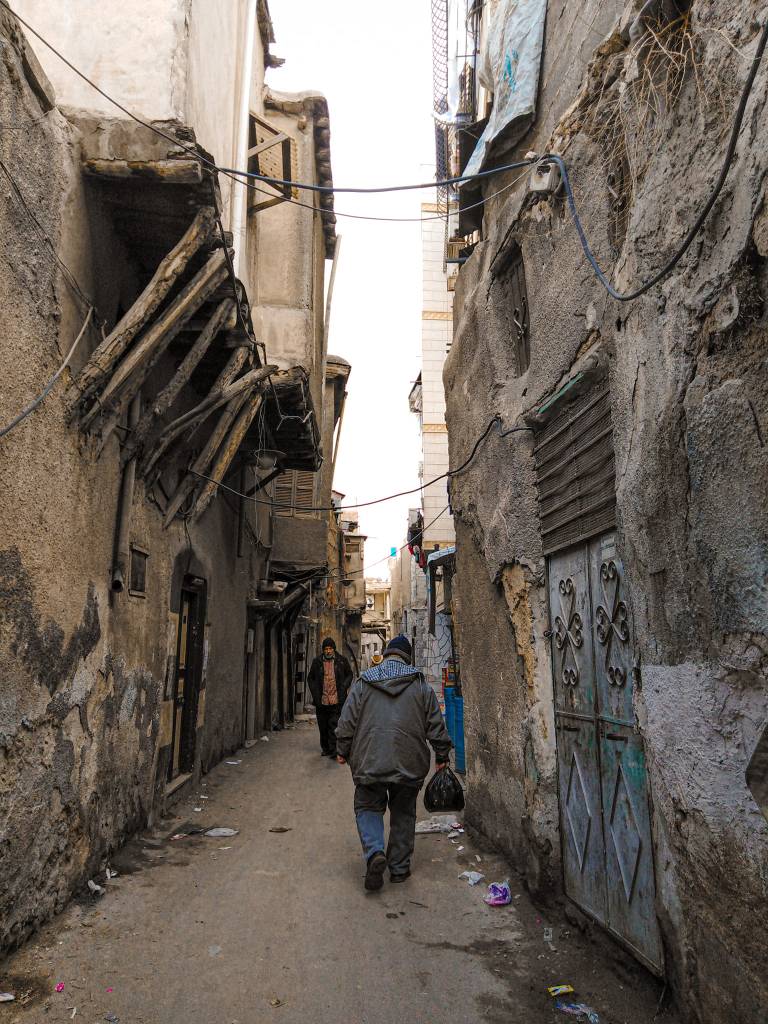
A fictional morning pages sketch, inspired by the photo below:
After it got sickened by pride and weakened by tyranny, rising empires have been crawling and gnawing on its limbs for millennia. Despite its consuming gangrene, the sickened giant outlasted many of its carrion enemies. One after the other, they fell, piling their decaying carcasses next to the moaning ruins till one day, after five thousand years of decomposition, it finally succumbed to its parasites. The fourth seat of the heavens, the prime branch of orthodoxy, the capital of the empire, Damascus, has fallen.
Of Morning Pages
I have skipped a day.
I have lost a beat.
The lost ripple ruined me.
The serenity of my monotonic symphony got disrupted.
Within the ebb, I got lost; I lived without a purpose, confused, anxious, alone.
In the shadows between the waves of imagination, I felt cold.
But never again. Never again shall I sit idle. Never again shall I waiver. Never again shall I be eclipsed.
Arise in the name of the muses.
Arise in the name of Apollo.
Hold the sword of humanity and march: march into the unknown and conquer the oblivion of your meagre existence; march with the greats hand in hand and page by page. Write on the pages of time, write for the future, write for us.
Stand up, my child. The future will, surely, be yours shall you embrace your present. Ripple by ripple shall you create till, one day, the advent of the surge.
Metamorphosis
A free writing exercise:
You could say I was thinking of other things when I shampooed my hair blue, and two glasses of red wine didn’t help my concentration. “It ain’t half bad! I just need to lift my hair. Voila! I might be able to blend in! But can I do it? Should I do it?” I stepped away from the mirror, mumbling to myself, thinking that I needed to pour myself more of the wine I kept hidden behind the mirror. “God, give me courage”, I told the transformed girl in the reflection as I reached for the wine bottle.
“Rasha, hurry up; we can’t stay here any longer.”
I ignored the calling, not because I didn’t understand the severity of the situation but because I hadn’t mustered the courage to do what needed to be done yet. I grabbed the bottle by the neck, bit and spat the cork, and chugged the rest of the wine. “Hurry up, wine, I don’t have time for you either,” I told myself as my father pushed the bathroom door violently and hit me in the back, spoiling my gulps, my mood, and my clothes.
“Rasha, what in the name of God are you doing?”
“What do you think I was doing?”
“What have you done to your hair? And where is your scarf?”
“Do I have to explain that now? I changed its colour.”
“I can see that, but why have you done that? Why now? We don’t have time for your… for such silly things.”
“…”
“God! Have you been drinking? This is not how I raised you. We have had this discussion before. This is the worst time to be drunk.”
“I thought that the wine could help.”
“Help with what? Have you lost your mind? We must leave RIGHT NOW!”
“I know! Why do you think so little of me? I have done it before. I know exactly what needs to be done.”
“The only thing that you need to do is pack your stuff and listen to me, like always.”
“No.”
“What do you mean? didn’t you pack?”
“This is not what I meant.”
“For god’s sake, not now, Rasha. I don’t have time to deal with you.”
“I mean, no, I am not following your lead this time. I am old enough to make my own decisions.”
“You are only eighteen, drunk and with blue hair. You obviously don’t know what you are talking about. I am not going to repeat myself, Rasha. Be a good girl and follow me. We must leave the city before dawn.”
“I told you I am not doing this. I will stay here this time. I will not leave my friends and home again. I am sick of all this travelling. I am sick of running away.”
“Rasha, let us go to a safe place first, then we can discuss your plans. I must ensure that your brother and sister are away and safe. I must protect them. I must protect you.”
“This is why I have done all of that: the drinking, the hair. I have changed. I don’t need your protection anymore. I have had enough of it.”
I didn’t want to give my newly found drunk resolution a chance to waiver, so I pushed my dad and left the bathroom, put on my khaki jacket, picked up my backpack, then bumped into my mom down on the stairs towards the living room.
“Mom! I am leaving. I am not going to follow father anymore.”
“I know.”
“How could you…?”
“You are my daughter.”
“Sorry, mom.”
“You don’t have to apologise. I would have done the same.”
“I can’t do it all over again. I want to protect you…like my father always says but not in that way. Not in his way.”
“I know, sweetie.”
“Ten years ago, we were forced to leave Aleppo, our home. I will not go through that pain again. This time I refuse to run away, and I refuse to stand idle. This time I can resist. I have grown stronger. Kharkiv is my new home, and I am not giving up on it. I am old enough to volunteer. If it comes to fighting, I will fight. And if it comes to bleeding, I will bleed. I belong here, mom. I have learned their language, and I have changed my looks. They will accept me now. They have to. They need me. They need to know that they shouldn’t run away. They have to take charge of their own destiny. That’s why I can no longer remain hidden. And I can no longer keep the veil”.
“I am proud of you, Rasha”. I reached for her hand, as she uttered these words, and kissed it, then darted towards the door ignoring the shouts of my father.
I ran away, leaving my past behind me. I left it sobbing and choking by a heavy air of uncertainty in my throat and an abyss of murky dread in my limbs that the gulps of wine didn’t manage to wash away. I went out into the dark, heading towards the unknown, unguarded and unveiled, deep into Shevchenkivskyi district when the sirens broke away the silence of the cold dawn. It is war!
The Tattered Throne
As I sat down, miles and miles away from home, trotting through my memoir and trudging from shore to shore, hoping to find one of the muses that I adore to face my darkest fear: that of filling a page and not to bore, I found an old scribble I wrote during the peaceful days of yore a decade before the war.
The memory itself had almost vanished, or rather I had probably banished it along with most of the memories that I deplore. I thought then to abort the mission for who would choose to leave heaven towards hell to explore? Yet the staring empty page brought me more terror than I could endure. So, I embarked on my journey, and through the hellish rabbit hole I jumped as I have never done before, and so I began to read.
I visited my grandfather today, a stern man who lived for a better half of a century. But contrary to men of his age, though, he is stubbornly erect and sure-footed like one of these rare and ancient evergreen oaks. He seems to have hacked through life and ageing, relying on cold showers, audacity, and mild cynicism.
My grandfather lives in a house full of contradictions but surprisingly suitable for its current dweller. The house was built more than 600 hundred years ago. One has only to glance at this monstrosity to understand the entire history of the region where I live. It has been built during the Byzantine era next to an ancient ruin that people claim to have been an edifice of Jupiter, the Roman god. Later in the house journey, the Byzantine Christian mosaic that adorned the living room had been stripped down of its icons and re-embellished to satisfy its new Turkish suiters. Then, centuries later, it was stripped down again and remodelled to serve its new pragmatic English masters. Its English journey did not last long though, and the property has been sold, for a very generous amount I have been told, to an Ashkenazic merchant, whom, with haste and after a very brief occupation, had sold the house to my grandfather 60 years ago costing him everything he had.
My grandfather’s presence amidst this historical symphony added to its complexity. He fought in two great wars on two different sides: not because of his lack of fidelity but because of the treacherous pendulum of fate and the greedy iron fist of his masters. His career as a fighter did not stop there though, when empires collapsed, he sought independence and earned his freedom with blood, eye, and hammer. But the worst enemy of all was lurking in the back yard, and the freedom that my grandfather sought and achieved was yet again stolen by civil war.
In the lull between wars, he marched towards new frontiers. He studied in English schools and earned a degree in journalism, and with that, he fought injustice and won, then earned a generous time in prison. And amidst all the struggle imposed by fellow men, he still had to wrestle with life and hunger, so he worked on society’s fringes, smuggling weapons to revolutionaries nurturing in return both his family and ideology.
Like my grandfather’s life, his house experienced a lot of transformations. New rooms had been annexed, demolished, rebuilt, and repurposed multiple times. Its central room had colonnades, mosaic, Arabic scripture, English furniture, a mezuzah, and, perhaps the most noticeable of all lying majestically in the middle of the room, is a simple old straw chair held together by ribbons of tattered cloth.
My grandfather called the tattered chair his throne and was reserved for him all the time, in fact, nobody dared to sit on the chair not only because we knew that it was reserved for him but of fear of breaking it apart.
Today, my grandfather’s fight with life has ended. And as I stood in his empty throne room, I could not but notice the ironic meaning of this absurd inheritance. I will never be able to know for sure though. His journey was as rich and as chaotic as the ancient house, but he perhaps felt as simple and fragile as his straw wooden chair.
All is lost now but for the woe, yet here I sit again but now with awe, and with hope renewed that my past would show me the way and help the words flow.
The eternal refugee
When will it be over? Or rather, will it be over? Will we be able to see the light? Or will I always be clawing my coffin from within?
What am I waiting for? A new identity? A release? A revelation? An epiphany? A Permission to live? I have been forsaken, and so did I to the world.
I belong in the pencil dust of the history writer. I live in the shadow of the editor’s notes. I am immortally nonexistent. I am the universe before being. I oscillate between dream and oblivion. I am less than an idea, Literate, Unheard. The bastard is my father. The neglected psychopath is my mother. I have been identified with my rapist. Kafka was right. I pretend to live his life. He is as big as my dream can be.
Listening to a forgotten immigrant song writing my identity, I weep
I weep writing, I weep listening, I weep thinking. I weep for the past that has been raped. I weep for the present that doesn’t exist. I weep for the shattered future.
We exist at the periphery of civilization, threatened by tycoons, struggling every day with extinction.
The Ritual
I was born and raised in the desert, in a small tribe, where the rituals of antiquity were still cherished.
I still remember our so-called rite of passage that all children had to go through to become tribesmen and women. A reminiscence of the ritual can still be found in every corner of my memory. How can I forget it? After all, becoming a tribesman was the only thing that I wanted or rather knew.
The ritual, my dear reader, was about proving yourself, about earning your place, about overcoming oneself and purging the desire for companionship, which, upon completion, allowed our elders to bestow upon the participant the title of a khan which allowed the tribe members to honorably wear the rings left for them by their ancestors.
The significance of the ritual can easily be understood when we see the seven great tribes renouncing their hatreds and rivalry for three full moons.
During the festive event of the rituals, tigers were sacrificed in the names of our fallen warriors, and a great feast was held in the name of the almighty.
The grandness of the ritual was only matched by my fear of failure. My fear was the sort of cage that trickery and subtlety, which I had none, were needed to break from. Believe me when I tell you, my dear reader, that aboard that cage hope seemed lost and the future looked dim. I then knew that in order to become a tribe member a significant appliance of courage is needed, of which, again, I had none.
The drums and the hums of the elders were getting louder the higher the moon rose in the sky.
The louder the sounds rose the more scared I felt. The people feasted and danced, sang and drank, but their escalated ecstasy and mayhem only escalated my fears and insecurities, but the sudden halt followed that festive explosion announced the commencement of the ritual.
The Crow, our tribe leader, with carrot-colored skin, painted especially for this occasion, summoned the participants to him.
He said, “times are changing, and so is our tribe, and this filthy ritual is to be abolished”, and so it was.
 The Book Of Life