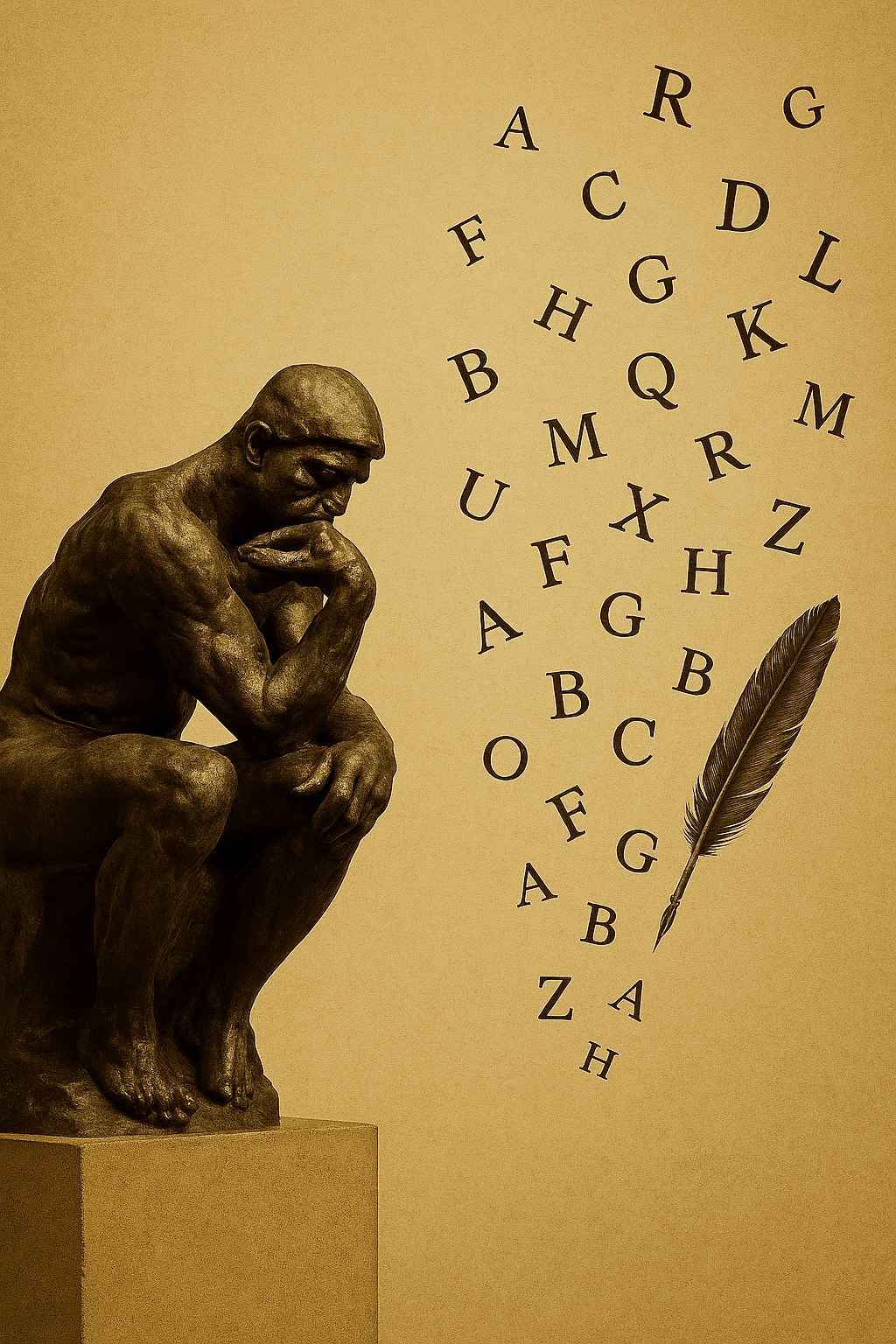
Buried behind the masked myth of erudition lay I—
a broken marionette yearning for a bosom.
From tongue to tongue, from age to age, I
sought a friend.
I scampered around, swinging my
naked
stub.  But for the fear of
frivolity and the scythe of judgement, I
unfurled not my letters upon the canvas of man.

But when I do, I
convolute my letters. I
raise high my quill. I
swing, supplicating, spraying:

Thus scribe I, with a foreign tongue, the lulls and yarns of yore—
a forlorn epitaph to a cursed populace:
thou for whom the bell I tolled, thee shall I forsake.

So wrote I
when I
left home.
Tag: English
Let Me Tell You
Show,
do not
tell,
they say.

Should I show you how she is—
bent
with sodden shoulders,
eerie knees,
bulging neck?
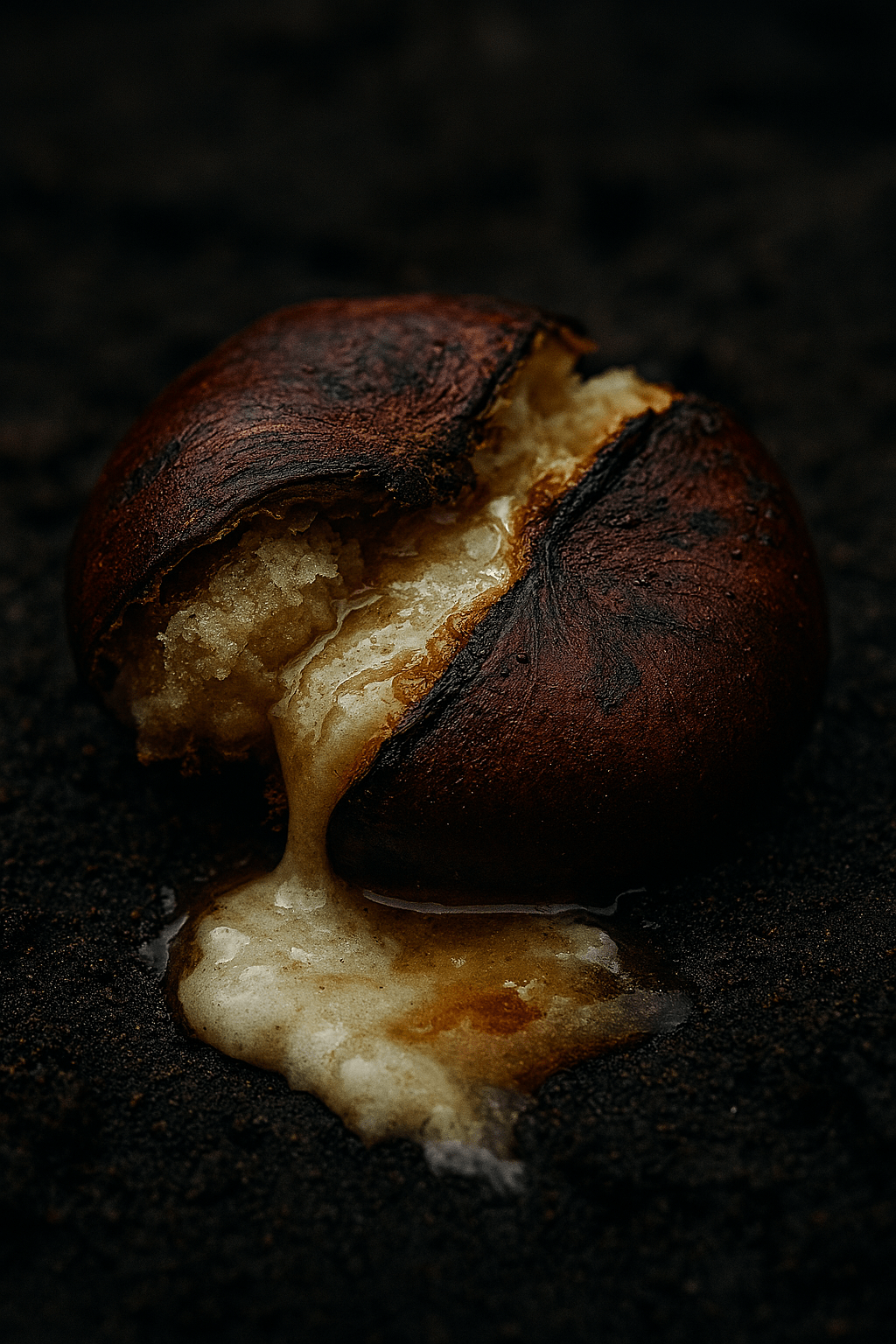
Bent into a ball,
like a festering kastania
oozing
after it had been stepped on,
its shell pressing hard in.

Look at her!
Shaking
bare feet,
black with muck,
six toes:
two lost to frost,
the others
to a pellet
from a shell.

Look at her!
Shaking
with a breath—
half white,
half red—
unable to contain
the life in.

Look at her!
Lean figure,
bone lean,
sagging leather pockets
for breasts,
and teeth removed
to relieve the pain.


Here she lives,
next to the pile
of filth,
the buoyant filth,
swimming
between homes
when it rains.

Why show you the pain?
Why do you need to see,
to understand?
Circumlocution is just a game.
So let me tell you
the truth
about the war.

It ends with
death!
Rosae damascena
I am the generation of mediocrity_
born in transition,
after the cold,
before the spring.
Unaccomplished. Unseen.
Skilled in disdain
equipped with a yoke,
we caressed the analog,
touched the digital,
turned blind to the AI.
From grenades
to self-driving drones,
we felt it all
falling
on our homes.
Dont get me wrong_
We lived in awe.
We tasted wealth,
paved the roads for better men.
Never seen an empire rise or fall.
Never been native
to anything
but disdain.
The Dove
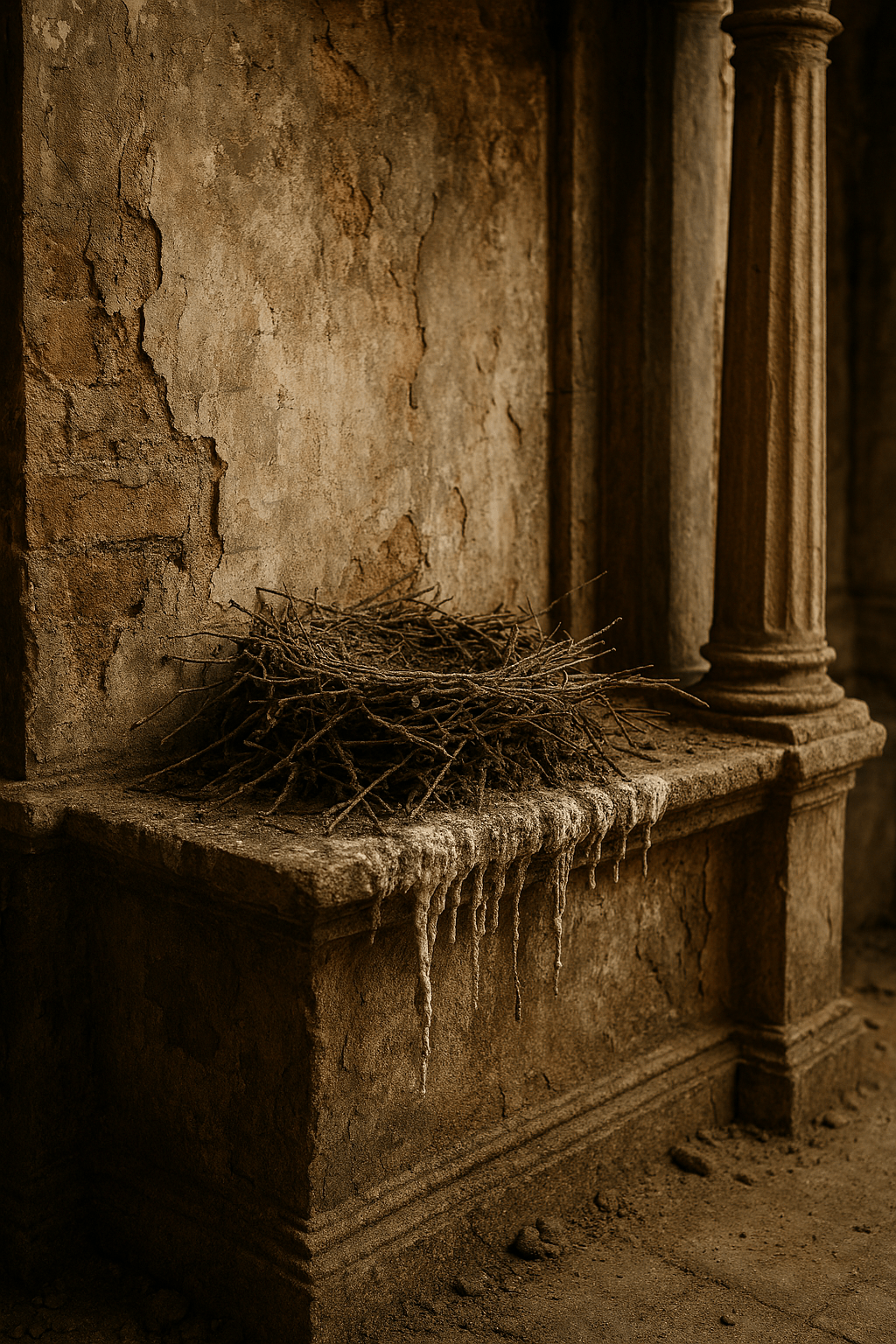
It nested there,
as they all do_
because this is what they do:
one layer of dried sticks
laid over the old,
held fast by secretions,
generations of that.

It cooed against grey walls,
bouncing off prayers
for a thousand years.
Now from a sheikh,
once from a priest,
a warlord,
an augur
that read the signs
in the dove’s entrails
searching for hope.
Old
I saw
a wretch
with missing limbs,
and creaking joints,
a tilted head,
a back bent,
and a hoarse
whine.
Come!
Look!
The devil waits!
Strain your eyes,
focus your light.
Aim at the dark
corners of the world—
in the alleys
behind the dumps,
next to the destitutes
that shat themselves
yesterday,
and the day before.
That’s her.
A purple scar,
another in white
on her side.
On her chest,
a stab—
rotten black with circles red,
whirling around
a heart
made of old,
just old,
and stone
erected for
Haddad,
then Jupiter,
then Christ,
and finally a Mosque.
Its people,
forgotten,
ill-gotten,
crawl like moss:
brown,
white,
and yellow,
churning,
oozing,
in endless strife.
Whisper—
else she hopes.
Let her be:
a goliath doomed.
Damascus.
Lucky Thirteen
Thirteen
years, it takes
to become
a man.
…
Thirteen
were the men
whom lastly
dined in.
…
Even in myth,
thirteen
were the knights
of Avalon.
…
In Babylon,
thirteen constellations
they saw.
…
Even the augurs,
the magi, and the holi rest,
thirteen,
they prophesied
as eternal law.
…
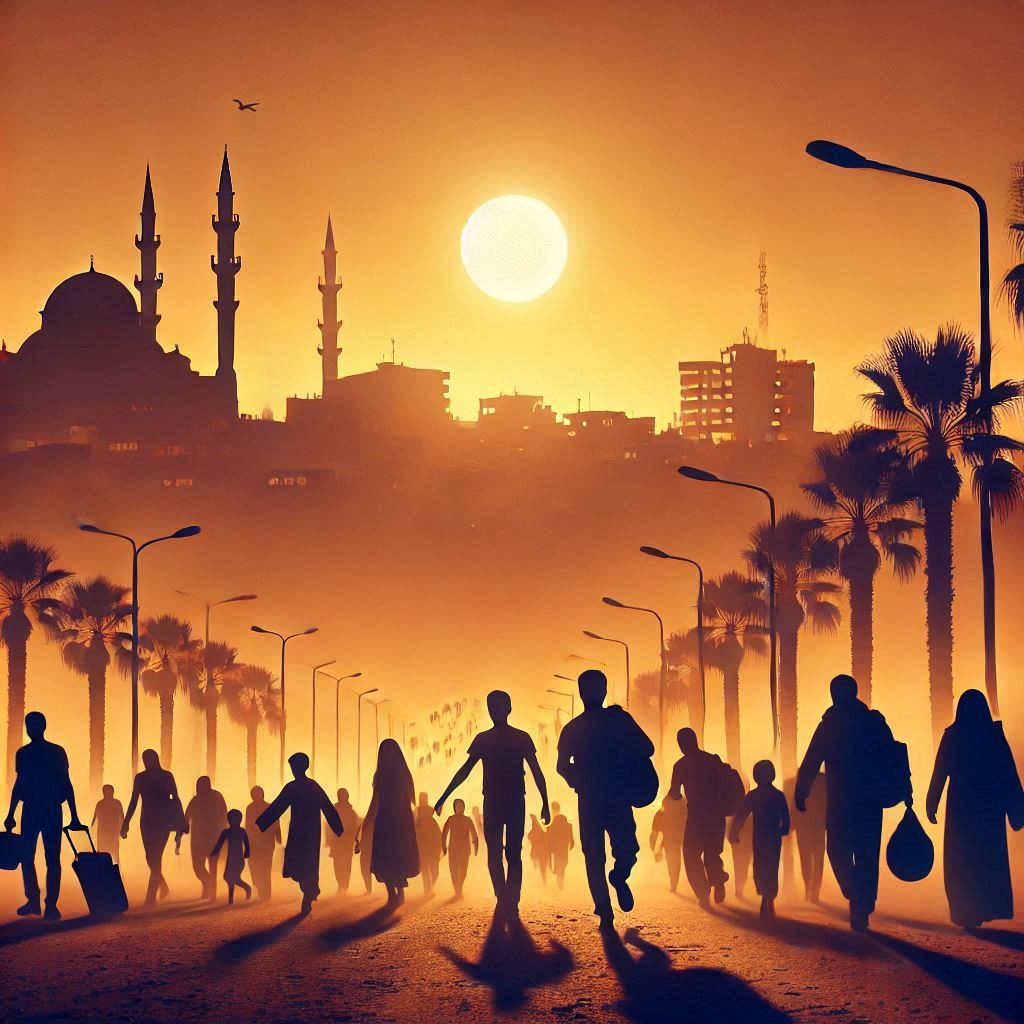
Thirteen is now,
when tyranny has fallen,
and all of us,
the dejected,
can go back
home.
The Syrian March
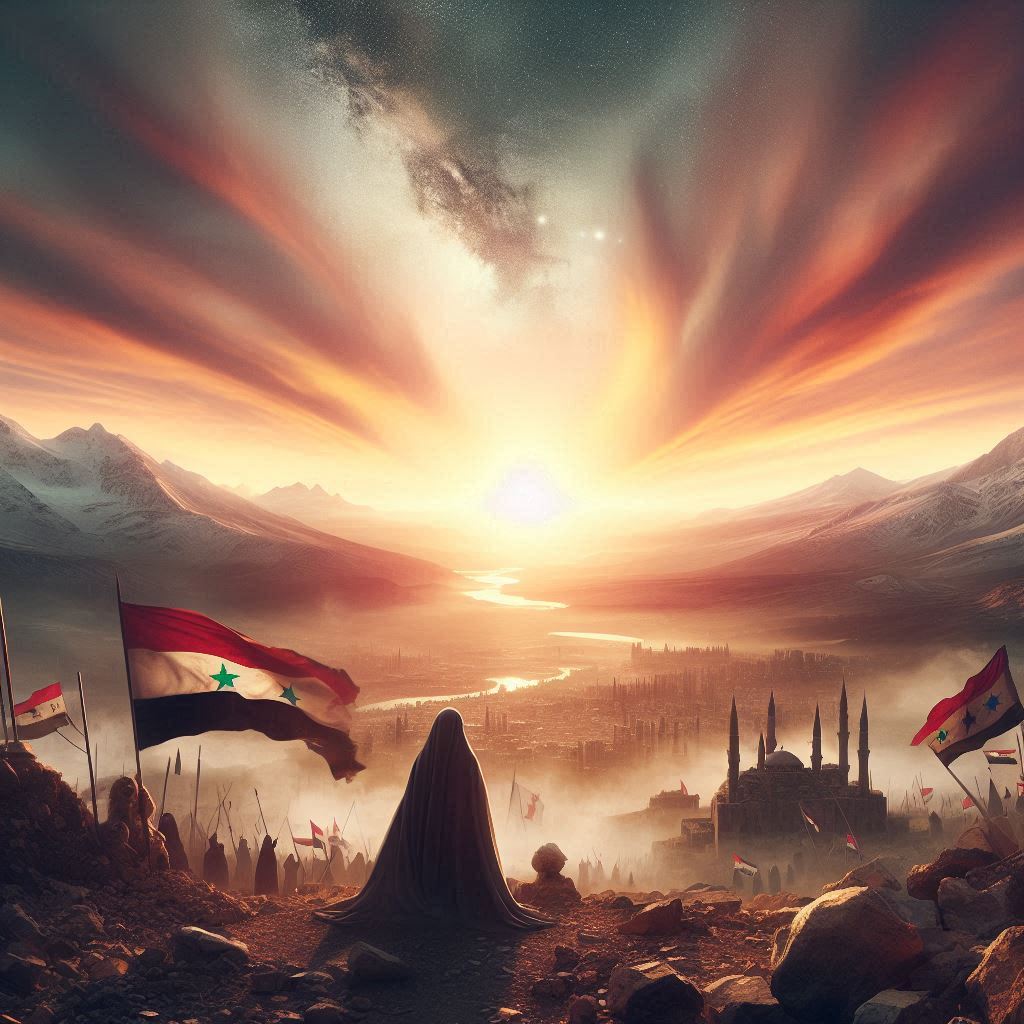
Awaken!
One numb vestige at a time.
Shake the veil off
Off your ancient bosom.
…
Amin,
Allahu akbar,
En deus vult!
Awaken!
…
Shake them off.
Dishevel the seeds,
Buried deep
to waken.
The seeds of
The martyrs, your children.
…
Limbo,
Where they lived
In.
Lives uncounted for.
Seen unseen. Lived unliven.
…
Judder now! Awaken!
And call us home.
The Immigrant
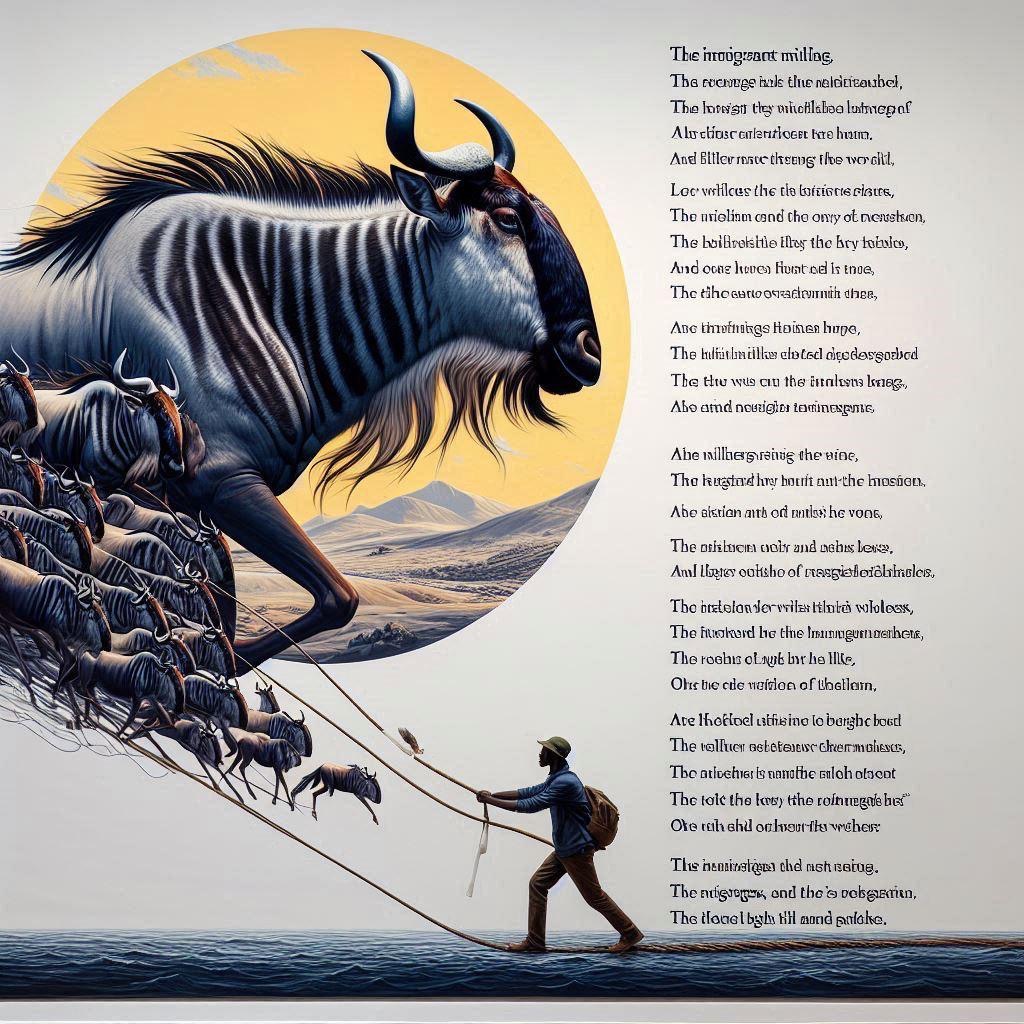
Poetry assignment at the OU
March
with assured backs over the meadows.
March,
following the seasons, avoiding the willows.
When asked:
how could you
leave behind your mother?
Or, it is but a sham,
it must be a cover. then
shout with uncontested virility,
with a roar that shakes that vicinity:
“Brothers!
the wildebeest
treads from fathom to fathom,
never caring
of a language or a septum.
Brothers!
Ignore the lions and hyenas.
For, they with territories
of excretion,
rely on your march and the lies of cohesion.
Do not bow to their rules of husbandry,
for yours is the mission of life.”
Manhood
Life writing. Autobiography. OU assignment. 1500 words short story
‘If a man does away with his traditional way of living and throws away his good customs, he had better first make certain that he has something of value to replace them’, by Robert Ruark.
The adult males of Damascus during the nineties followed a ritual that had endured the shifts and the schisms of the ancient world for millennia. They woke up, shaved their beards, curled up their handlebar moustaches, drank the cardamom-enriched black coffee that the females in their lives meticulously made for them every day, then shat before leaving their domestic environs enforcing their hairy wills, that they inherited from their forefathers and their despots, on the rest of us.
As a first son, I was never seen as a teenager. I was the person who would inherit the will of the family, the will of the Mahassen. So when I finally had my first wet dream, I was deemed ready for the title of a man. But to be rewarded with such an honour, I had to take care of a fluffy sheep for a month before slaughtering it with the same hands that fed it, celebrating the humble festivities of Ramadan.
Thus, by the time I became a man, I had corroborated and assimilated the wills of my despots, shedding away layers of myself into the corners of the dejected and the artists, earning me a stigma that still accompanies me to this day.
It was in seventh grade when I first discovered them: the physical symptoms of manhood: a creeping wisp of hair on top of my upper lip and a voice like a radio searching for its identity, moving from one channel to another, oscillating between a shriek and a bass in confusion. Being the tallest in the class had earned me the honour of sitting at the very back seat usually reserved for the unwilling and the nasty. I sat alone in desks stacked with four and a class hoarded with sixty kids. The classes were mixed. I mean, the classrooms were allowed to have both boys and girls, as was befitting of a liberal Christian private school. We didn’t sit at the same desks, of course. The class was split into three lanes, two of which were crowded with boys.
The day I broke free was the day our Islamic studies teacher discussed with us a taboo, a forbidden and shameful topic that was excluded from our curriculum.
‘Want is human’, I remember her preaching, ‘what we do with it is what distinguishes us from animals. Soon, something will wake up in you, some sort of a rage. It is alright to feel enraged, of course, but it is uncivilised to hit other people.’ Her statement was met with utter silence that she interpreted as confusion.
‘Listen, soon you will start having happy dreams about the other gender. When that happens, you are no longer a child.’ She paused again, trying to read the room. But having experienced that already, I stood up and spouted blatantly with a confident bass:
‘It happened to me last week!’
The room, of course, exploded with laughter.
1996 was the year of a very successful debut: an advent that took hold of the ancient dry canvas of the Middle Eastern youth, burning it to cinders, dragging American culture forcibly into our dilapidated schools. 1996 was the year of the Backstreet Boys:
Clean-shaven boys who lithely swayed and twisted, satisfying the beats of the drums in response to what seemed to me to be their rage.
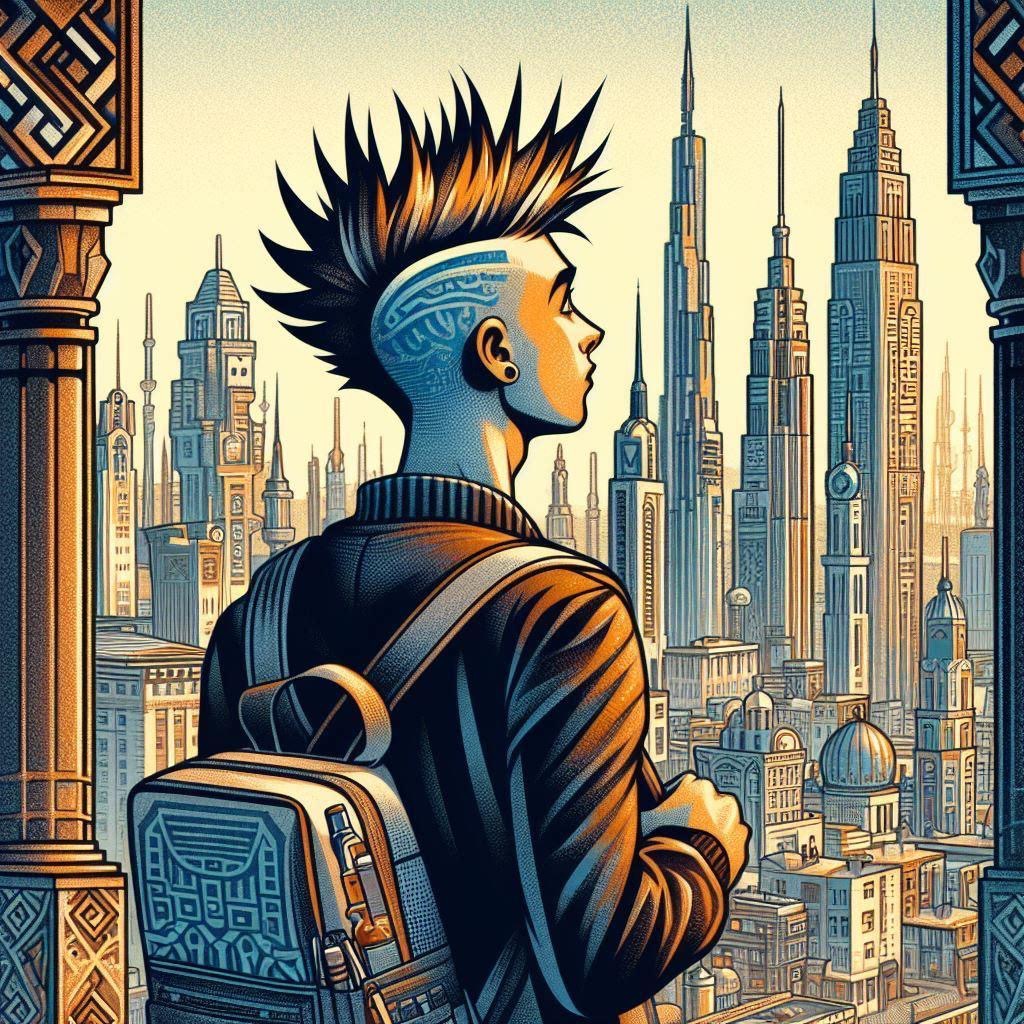
With their advent, I decided it was time to become my own person. I shaved my moustache, got a Walkman, and did the daringest thing I have ever done: I bought some gel and other hair products. Then I went to the barber and asked him to give me a Spiky haircut. He looked at me and said:
‘Spy what?’
‘Zero on the sides and the back. Two in the middle. Three at the front.’
‘Are you sure?’
‘Never been surer.’
‘Did you ask your father?’
‘Don’t worry about that.’
‘Just trying to be thoughtful.’
‘I know. Thanks.’
And so, I spent the winter break of 1996 figuring my new self out. And figure it I did. Oh, how glorious. My younger brother, owe struck, was proud of the person I became: a modern, supple, western-looking, rebelling youth of the ancient city. But as the barber foretold it, my father sneered at me. He expressed his refusal and his indifference to the worldly subject of looks by lowering his reading glasses for a second before going back to reading his veritable books about the Crusades, Machiavelli, the Italian Renaissance, Islamic decadence, or the Baath Party influence, or a book that talked about all of that at the same time. With my despot out of the picture, all was set for my revival.
My body still vividly reverberates with the memory of the first day of the new me.
I wake up early, as usual, but instead of dragging myself out of bed, I jump to the bathroom and start working on my hair. I finish my rituals and leave my house at 06:30 AM. It is still dark. It was snowing during the night. I put on my school uniform: a kaki-coloured military suit possibly borrowed from the Red Army, but I skip the beret.
I notice several pigeons huddled on the fence next to the bus stop. I approach them. They ruffle a little at first, but as I get closer, they become more violent. A couple flies away, but two flaps still hysterically before falling on the asphalt. Frostbite. Their stiff claws got frozen on the fence during the night. They might live, but they will lose a leg or two. I don’t have time to pick them up because the bus has just arrived and I am unwilling to miss it.
I am the eldest, so the back seat is reserved for me. I notice the elementary-level kids looking at me and my hair. I puff up and take my time walking down towards my seat. One hour and a half later, I reach school. I know it is very far, but that is the price my parents were willing for me to pay to get a private education.
At the main gate, I am greeted by the gatekeeper, Mansour.
‘Hey, you,’ He snarls at me.
‘Good morning, Mr. Mansour,’ I reply, heading inside.
‘Stop!’ He announces, blocking my path.
‘Who? Me?’
‘Yes, you. You are not allowed to enter.’
‘Not allowed to enter!’ I repeat, laughing, trying to twirl around him and step inside. But to my surprise, he snaps his fist at my coat, twisting the collar firmly with his thick, anvil-looking grip.
‘Let go of me.’
‘Where do you think you are?’
‘What is this all about, Mansour?’
‘You are not allowed to get inside looking like that!’
‘It is not up to you to decide.’
‘I am here to protect the school.’
‘From what, you brute? It seems that I need protection from you. Let go of me before I get you into trouble.’
At that moment, the deputy dean, a government-assigned official whose contribution to the school was so marginal and unnecessary that his name eludes me to this day, hears us.
‘What seems to be the problem?’ Asks the unnamed official.
‘This kid. Look at him!’
The deputy languidly looks at me with soggy eyes and waves his chubby little fingers. ‘This is not the look of a comrade. It seems your parents failed. You look like a wimp. Go back home.’
Emboldened by the mention of my parents, I retort, ‘Me? A wimp? Wait till my father hears of this. I will leave now, but you better be prepared for what will come.’
‘Wait,’ lashes the official. ‘Pray. Dear, what does your father do?’
Having felt his change in tone and reluctance, I raise my voice and spell my syllables one by one: ‘non-of-your-damn-buz-ness.’
Confrontations and shouting attract people like a moth. And huge gatherings attract the eyes of predators.
‘Assaad, come here, boy,’ a booming voice echoes through the corridor, splitting the crowds and clearing the path between me and the school’s real dean, Fouad Y.
Let me tell you a little bit about Fouad. Education and pedagogical qualifications were not enough barriers to hinder his career. His will and connections allowed him to secure the vote of the Patriarch of the Roman Orthodox church in Damascus, eliminating all competition and securing him the seat of the dean for one of the most prestigious schools. However, to compensate for his lack of educational background in running the business, he wore a white lab coat, hiding his lack of academic understanding. His manufactured liberal persona gave him room for some aesthetic divergence: His slick hair was drenched with castor oil and filled the school with a petroleum smell.
‘My name is Refaat, sir.’
‘I know, Assaad. Come here, boy.’
‘Ok, sir,’ I say, approaching him, ‘but my name…’ My sentence is interrupted by a sharp whistle that lands on my frozen ears.
‘Don’t talk back to me, boy.’
As the heat of the slap spreads into my cheeks, I feel his hand gripping the back side of my collar and dragging me towards the school’s playground. I try to resist, but both Mansour and the official help restrain my movement.
‘Take him to the sink!’ Fouad snorts.
In the middle of the schoolyard, right in the open, on a frozen morning in January, on the day I decided to become a man, my divergent persona got washed away by despots.
Next year, I dyed my hair blue.
A Broken Line
Chosen Prompt: Tramlines, Fiction. 2000 words. OU (Open University)
“When I the story of the dreamful youth had found,
It had told of a place both uncouth and unbound;
A place full of the frolic swallows;
Desolate of the painful sallows.
And if you of that story eager to know,
Wallow with me in the callow realms below.”
That day was etched into my psyche and kick-started my consciousness. The sun was at its zenith, looking down at us and lulling life into an intoxicating sleepless sleep when its soliloquy was interrupted by a mirthful voice, pulsing with a static noise, emanating from a wooden box:
“1913 shall be known as a historic day! The century-long-awaited revolution is here! Damascus is walking side by side with the industrialised world. The European ingenuity was commissioned by his majesty Sultan Abdul Hamid; may god prolong his life. The Hejaz railway is finally open to the public. Rejoice, brothers and sisters, we could finally reach Mecca on the wings of revolution”.
“I was a child of four then”, my grandfather had told me.
“We didn’t manage to get rid of our agricultural gown, but the Hejaz station helped us break free from the siege of time on our cities. We felt that we could reach out our hands and grab the world.
“I remember myself”, he continued, “dragging one of my toys behind me: a handmade wooden horse attached to a cord. Leaving my house through the garden, I descend into the back street. It wasn’t a street then. It was a muddy, rocky neighbourhood brimming with wild Cactus and Jasmin. But amidst the arid environs, there lays a new, shiny, and drawn-out object that spanned across in a panoramic view. I run towards it, dragging my horse and bumping it against rocks and vegetation. But when I reach the shiny thing, I bend over with shaky legs and touch it. Its brutal coldness seeps into me, forcing my heart to pump back in resistance through my palm against the cold surface. But the metal replies by shaking the earth below my feet. The vibrations build up within me into a giggle that gets disrupted by the shouts of my mother, followed by a monstrous shriek. I instinctively look to the left, spotting the approaching juggernaut: a black-eyed beast with a steaming nostril, foaming angry smoke in hysteria. I freeze, as you might expect, not in fear but in awe.
I survive, of course, because my father, alarmed by my mother, rushes over and grabs me by the waist. My old wooden toy gets smashed. I look up, and I see smiling faces waving at me through windows. I laugh”.
“Your great-grandfather was profoundly altered after that day”, my grandfather explained. “Change was approaching, rapid and fast, faster than our people could comprehend. The station was decommissioned in 1920 during the Great Arab Revolt, but the crescendo of developments never ceased to stop. The metaphoric train of revolution kept on going, and its force persisted. It survived through me, and I hereby attempt to kindle it in you”.
This is what I still remember of his story. My grandfather is long gone, but his house and the railway are still there. His story had so passionately altered me that in 2020, I decided, against the advice of my family, to visit the home of my ancestors.
Damascus, during that time, was a city downing in the marches of Styx. With the crescendo of catastrophes playing for a century, she was hanging between worlds in delirium. But when the stifling epidemic gave the war-torn country a breather, the lunatics and the emotionally chained saw an opportunity. I seized that chance.
I will save you, dear reader, the logistical troubles of my journey to Damascus. But what you ought to know is that I managed to arrive safely. And that I stood right there on the spot that my grandfather spoke of, the spot where progress was rolling, steaming with passion. Below is a detailed account of what I remember:
I leave the taxi three blocks from the decommissioned station because the taxi refuses to drop me any closer, scared for his safety. It is late in the afternoon. Street lamps are off, and shadows are invading corners and alleys.
As I approach the station, I notice its modern occupants: a local militia, a group of young boys claiming to uphold the neighbourhood’s safety. I do not attempt to sneak into the passenger quarter, but I look for an opportunity to get to the courtyard and into the rails without being spotted. Waiting for the sky to put on its concealing garments, I sidestep into one of the alleyways lurking. As I squint, probing the façade, I notice a yellowish moss possessing the building, covering its blackened corners and columns: survivors of bombings and fires. The once majestic herald of progress is now a rabid mule, a burden for its owners. But then I spot a chance. The side fence is unguarded and fully draped with the night shadows. I manage to sneak in, skipping into the courtyard.
I had once imagined it to be a facsimile of Eden, embellished with Arabic calligraphy, adorned with lavish Turkish gardens, and gushing with yodelling fountains. I had envisioned it full of muscled trains capable of dragging enlightenment forcibly across the continents.
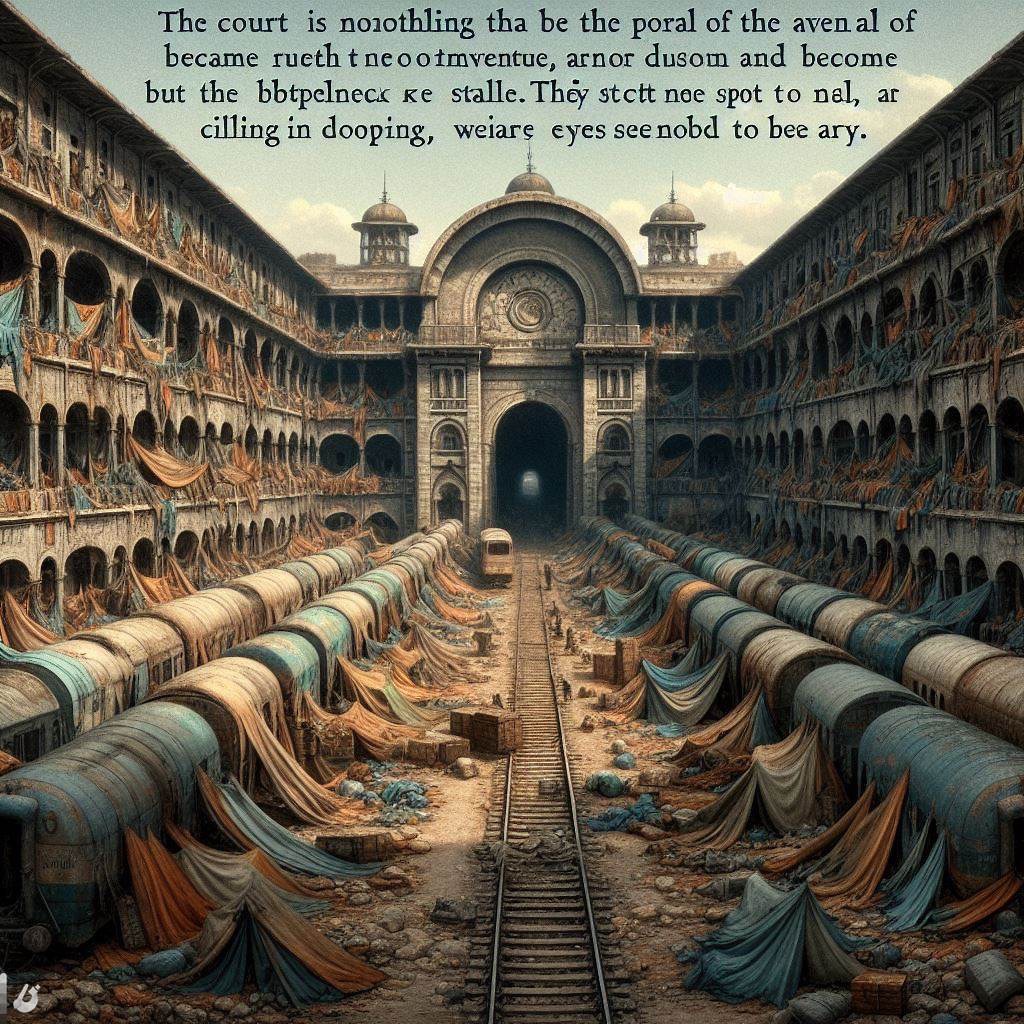
The court is nothing like that. It seized to be the portal for adventure and became the bottleneck of misery. It is stacked with dilapidated tents, full of moving silent skeletons. They spot me, but their drooping, weary eyes seem unable to see me. And what is left of the dismantled trains is but the junk that is hard to sell, pilling in stacks of rusting corpses.
I walk past the tents and towards the rails. It takes a while to find them, or rather what’s left of them: continuous marks of rust marching towards darkness, towards its original destination: Hejaz.
I trudge forward, burdened with thought and anticipation for a good chunk of the night. When I finally stop and look around, I spot the Jasmin and the Cactus creeping up through cracks in the neglected asphalt. And to my right, I see a flashing sign:
No trespassing allowed, detention centre.
I weep.
 The Book Of Life